
Surkh








Red is the colour that has dressed Pakistani brides for generations. Before blush became fashionable and ivory became acceptable, red was not a choice but a given.
Surkh, the Urdu word for red, is Sara Rohale Asghar's tribute to that tradition. The collection holds four bridal ensembles, each built to restore what the red bridal outfit was always meant to be: deeply crafted, heavily embellished, and entirely present on the most important day of a woman's life.
What the Surkh Collection Contains
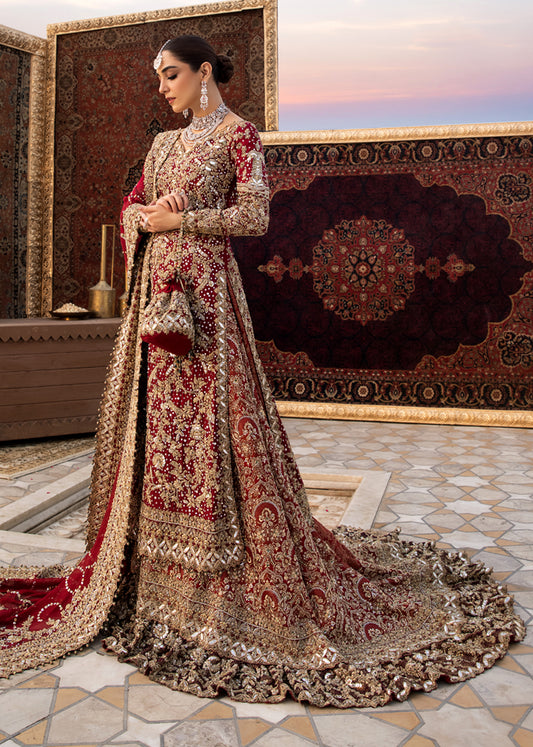
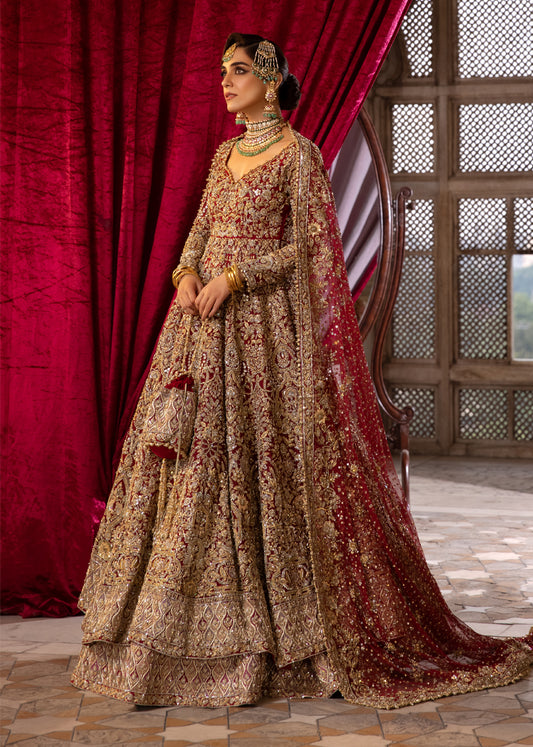
The four pieces in Surkh represent different expressions of the red bridal silhouette. Zahira is an all-red farshi ensemble with classic mukesh, zardozi, tilla, and bead embellishment worked into flower jaal and geometric patterns, designed to evoke the vintage bridal aesthetic. Maya is a double-layer pishwaas drawing from Mughlai archive artwork, finished with Kashmiri tilla, dabka, kora, and pearls, paired with a rouge dupatta.
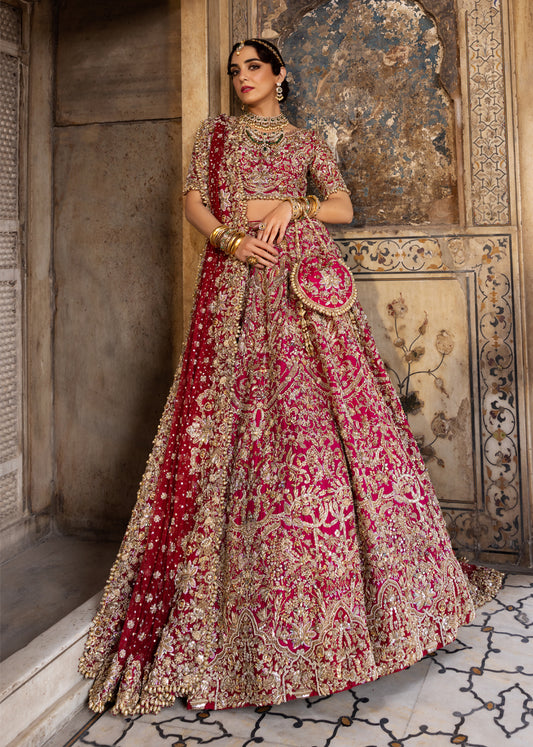
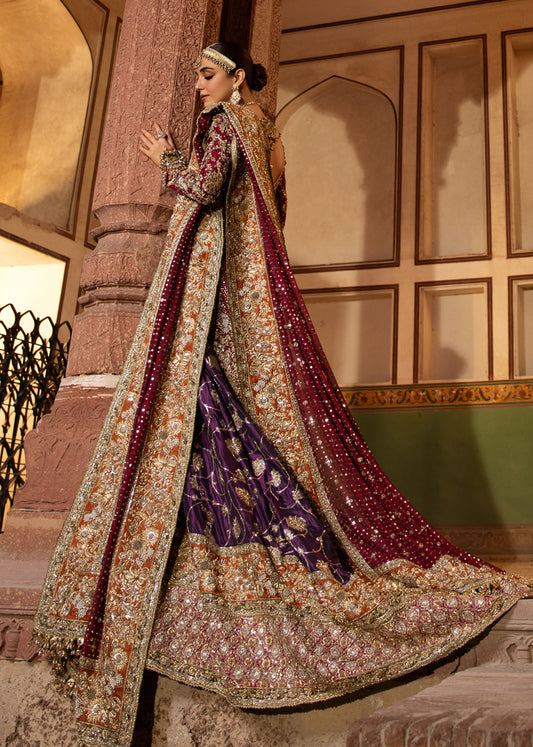
Shireen is a silk lehenga choli in deep blush pink with a fresh blood-red dupatta, the embroidery referencing Persian craftsmanship in gold and silver work. Areeba is built around a jamni keemkhab farshi with a red shirt and dupatta in dabka and mukesh.
Each piece is inquiry-based and made to order. Brides who want to understand the full range of Sara Rohale Asghar bridal options alongside the Surkh collection can view the complete bridal collection for ensembles across all colour directions and silhouettes.
The Embroidery Behind Each Surkh Piece
The embellishment across Surkh is built from techniques that belong to the Subcontinental craft tradition. Zardozi, which uses metallic thread and wire to build raised three-dimensional motifs, is worked across Zahira alongside tilla and mukesh. Tilla uses fine gold or silver wire laid flat across the fabric surface to create detailed geometric and floral fills.
Mukesh work involves piercing the fabric with metallic wire, creating a glittering texture across the embroidery ground. Maya adds Kashmiri tilla, dabka, kora, and pearls. Areeba carries keemkhab, a brocade woven with metallic thread that provides shimmer without additional embroidery weight. Each garment takes several months to complete.
For brides whose wedding functions span multiple days, the wedding wear collection holds occasion-specific pieces suited to functions beyond the main event, in complementary colours and embellishment levels.
Ordering a Surkh Bridal Piece
All pieces in the Surkh collection are made to order. No garment is held in stock. Because the embroidery work across each ensemble takes several months to complete by hand, brides are encouraged to begin the inquiry process as early as possible relative to their wedding date.
Each inquiry opens a conversation with the Sara Rohale Asghar team about fabric selection, measurements, event date, and any customisation the bride requires.
New pieces added to the Surkh and bridal lines are listed on the new arrivals page as they are completed and released. Brides following the brand can check there for the most recently added ensembles across all collections.
FAQs
What does Surkh mean?
Surkh is the Urdu word for red. The collection is named to reflect its defining characteristic: all four bridal ensembles are built around the colour red in its various shades and tones.
Are the Surkh bridal dresses available to purchase directly?
No. All Surkh pieces are inquiry-based and made to order. Interested brides contact the Sara Rohale Asghar team to begin a consultation before production starts.
What embroidery techniques are used in the Surkh collection?
The collection includes zardozi, mukesh, tilla, dabka, kora, Kashmiri tilla, and pearl work across its four pieces. The specific combination varies by garment.
Can a Surkh ensemble be customised?
Customisation is discussed through the inquiry process. Fabric choices, measurements, and design adjustments are confirmed in consultation with the Sara Rohale Asghar team.
How long does it take to produce a Surkh bridal dress?
Each piece takes several months to complete due to the extent of hand embroidery involved. Brides should begin inquiring as early as possible before their wedding date.